

How Can You Tell if a Roof Leak Needs a Patch or a Total Replacement?
Discovering a water stain spreading across your ceiling is a moment that fills any homeowner with immediate dread. Your mind instantly races to the worst-case scenario: a massive, incredibly expensive construction project that disrupts your entire household for weeks. A leaking roof is one of the most critical maintenance emergencies a property owner can face, but it does not always mean your entire structure is doomed. Understanding whether that trickling water requires a quick, localized fix or a complete structural overhaul is essential for protecting your property and managing your finances effectively.
The line between a minor fix and a major construction project comes down to structural integrity, the age of the materials, and the true extent of the water intrusion. Making the wrong call can either result in throwing money away on temporary fixes for a failing structure or replacing a system that still has a decade of healthy life left in it. By educating yourself on how water moves, what signs to look for inside your attic, and how professionals evaluate damage, you can approach the situation with confidence. Let us dive deep into how you can accurately diagnose a roof leak and make the smartest, most cost-effective choice for your home.

Track Down the Exact Source of Indoor Water Stains
The first step in diagnosing your problem is understanding that where water appears on your ceiling rarely aligns perfectly with where the leak is on the exterior. Water is incredibly opportunistic; it will penetrate an outer layer, run along a rafter, migrate across a vapor barrier, and finally drop onto your drywall feet away from the entry point. To determine if your issue is a simple localized failure or a symptom of widespread decay, you need to grab a flashlight and safely access your attic during or immediately after a rainstorm. Look for active dripping, damp insulation, or dark tracking marks along the wooden framing to isolate the true origin.
Identifying the specific point of failure helps you determine if the problem is an isolated issue or something requiring broader structural evaluation. For instance, if the water is entering around a single rusted chimney flashing or a cracked plumbing vent boot, a targeted roofing repair will usually resolve the issue completely without breaking the bank. However, if you find multiple active drips scattered across different sections of the attic, the protective barrier of your home has likely reached the end of its operational lifespan. In these multi-leak scenarios, it is highly recommended to contact a professional local roofing company to assess whether the underlying decking has suffered from rot.
Evaluate the Total Number of Active Problem Areas
A single, isolated leak caused by a rogue tree branch or recent high winds scratching off a few shingles is a prime candidate for a quick patch. When damage is confined to one specific area, a technician can easily replace the compromised materials, reseal the valleys, and restore the waterproof envelope. This targeted approach preserves your budget while safely extending the life of the surrounding structure. You should always opt for localized repairs when the rest of the surface is uniform, healthy, and showing no signs of generalized age or structural sagging.
On the other hand, a roof that resembles a patchwork quilt of different colored shingles from years of repeated fixes is screaming for a permanent solution. When you are constantly dealing with new leaks every time a heavy storm passes through, patching is no longer saving you money—it is merely delaying the inevitable while risking catastrophic interior mold growth. Widespread failures across multiple slopes indicate that the entire material system has failed uniformly. At this stage, investing in full roof replacements is the only financially sound strategy to secure your property and restore its long-term resale value.
Assess the Age and Lifespan of Your Existing Materials
Every building material comes with a predetermined expiration date that dictates how gracefully it can withstand the elements. Standard architectural asphalt shingles typically last between twenty and twenty-five years, while premium materials can endure much longer if properly maintained. If your current system is less than ten years old and begins to leak, the failure is almost certainly an isolated installation defect or a localized weather event that can be easily patched. Knowing the history and age of your home’s exterior envelope provides the context necessary to make an informed, practical decision.
When dealing with more durable, premium upgrades like modern metal roofs, a leak is highly unlikely to signify a systemic failure of the panels themselves. Instead, water penetration on these systems usually stems from backed-out neoprene screws or deteriorated sealant around structural penetrations, which can be easily serviced. However, if you are dealing with a standard asphalt system that is well past its two-decade milestone, patching is a waste of resources because the surrounding shingles are too brittle to handle the repair process. In these advanced age cases, consulting with reputable local roofing companies will give you a clear picture of modern, energy-efficient replacement options.
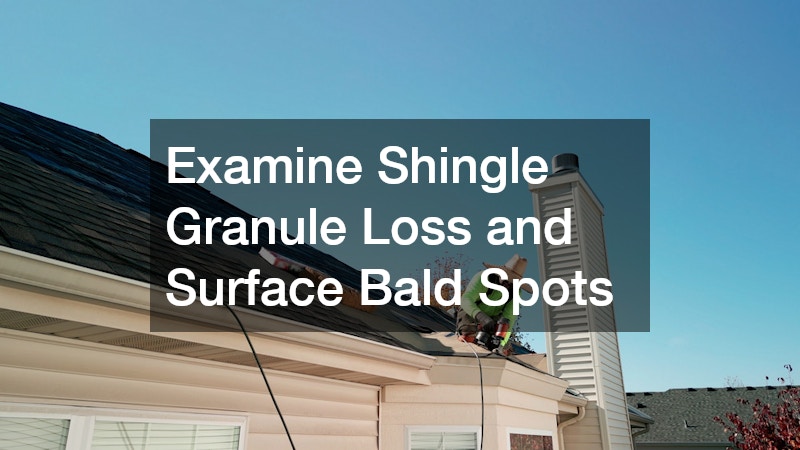
Examine Shingle Granule Loss and Surface Bald Spots
Asphalt shingles rely on a thick outer layer of ceramic granules to shield the underlying fiberglass mat from destructive ultraviolet radiation. Over decades of exposure to sun, rain, and heavy wind, these granules naturally loosen and wash down into your gutter system. If you notice that your gutters are constantly filling up with a thick layer of sand-like debris, your shingles are rapidly losing their structural defense system. Take a careful look at your slopes from the safety of a ladder or using a pair of binoculars to check for bald spots where the black fiberglass backing is exposed.
-
Check the Gutter Troughs: Look for heavy accumulations of colored sand after intense rainstorms.
-
Inspect the Shingle Texture: Identify brittle, shiny, or dark spots on the slopes that indicate bare fiberglass.
-
Observe Edge Conditions: Look for shingles that are actively curling upwards or clawing downward toward the deck.
-
Evaluate Structural Pliability: Gently lift the edge of an overlapping shingle; if it cracks immediately instead of flexing, it can no longer be patched.
When shingles lose their protective granules, they become incredibly brittle, dry out, and crack under the thermal expansion of a normal summer day. Attempting a minor patch on a surface plagued by widespread granule loss is virtually impossible because the surrounding shingles will break apart the moment a technician tries to manipulate them or drive a nail through them. If your system has degraded to this brittle state, you must transition your focus away from temporary fixes. Reaching out to provider networks that offer comprehensive residential roofing services will allow you to explore modern options that feature advanced UV-resistant technologies.
Check for Widespread Moss, Mold, and Algae Growth
While a small patch of black algae stains might look unsightly, it is purely cosmetic and can usually be cleaned safely without replacing any materials. However, thick, vibrant green cushions of moss growing between and underneath your shingles represent a severe structural threat to your home. Moss acts exactly like a sponge, trapping heavy moisture directly against the surface of your roofing materials for weeks at a time. This constant moisture exposure rots the organic mat within the shingles and allows water to seep slowly backward up the slope, bypassing the protective overlap design.
If the moss growth is confined to a small, heavily shaded northern corner of your home, you can often clean the area and perform a localized restoration. However, if the vegetation has spread universally across entire slopes and the roots have lifted the shingles off the deck, the structural integrity of the system has been compromised. Water has likely soaked into the underlying plywood sheets, creating an ideal breeding ground for toxic interior wood mold. When dealing with extensive organic rot, hiring a certified local roof repair specialist to rip out the damaged decking and rebuild the system safely is paramount for your family’s health.
Investigate Attic Decking and Structural Rafter Health
To truly understand the severity of a leak, you must look beneath the surface at the wooden decking boards that hold your shingles in place. Healthy decking should be light-colored, stiff, and entirely dry to the touch even during a heavy downpour. When you are up in your attic space, use the handle of a screwdriver to gently press against any wooden areas directly beneath the suspected leak location. If the wood feels soft, spongy, or gives way under light pressure, water has been saturating that area silently for months or even years.
Spongy, water-logged decking can never be ignored or simply covered over with a quick exterior patch. A localized repair will fail almost immediately because the rotting wood underneath cannot hold a nail securely, causing the new shingles to blow off during the next high-wind event. If your attic inspection reveals sagging rafters, extensive black mold growth, or widespread wood rot across multiple sheets of plywood, you are facing a structural emergency. It is critical to bring in experienced local roofers who can safely remove the compromised wood and rebuild the entire structural platform from the rafters up.

Address Vulnerabilities Around Roof Penetrations and Flashing
A significant percentage of sudden residential leaks do not originate from a failure of the shingles themselves, but rather from the metal flashing around joints. Flashing is the unsung hero of your home’s exterior, installed around chimneys, dormer walls, skylights, and plumbing vents to redirect water away from sharp angles. Because these areas experience extreme temperature swings, the metal can warp, or the surrounding polyurethane sealants can crack and dry out over time. When flashing fails, water can rush directly into the interior framing of your home in massive volumes during a downpour.
Fortunately, flashing failures are almost always highly localized issues that can be resolved completely with targeted maintenance. A skilled technician can cut away the old caulking, replace rusted metal steps, and apply premium, weather-resistant flashing cement to restore a perfect seal. If your shingles are young and healthy, a precise flashing overhaul is an excellent, cost-effective way to stop an active leak without paying for a full tear-off. To ensure this precise work is executed flawlessly, look for a highly rated local roofing company that specializes in detailed architectural flashing diagnostics.
Analyze the Impact of Ice Dams and Winter Weather
In colder climates, winter weather introduces a unique structural hazard known as ice damming, which can cause severe interior leaking. Ice dams form when heat escaping from your attic melts the snow on your upper roof slopes, causing the water to run down until it hits the freezing, uninsulated eaves. Once the runoff reaches the cold edge, it freezes solid, creating a thick ice barrier that traps subsequent meltwater behind it. This trapped water has nowhere to go but backward, forcing its way underneath the shingles and spilling directly down into your home’s exterior walls.
If your home experiences a sudden leak during a heavy winter freeze, the issue is often a symptom of poor attic insulation and ventilation rather than a structural failure of your materials. Once spring arrives, a localized repair can be performed to install a heavy-duty waterproof ice and water shield membrane along the vulnerable eaves. However, if your home has endured decades of repeated ice damming without intervention, the continuous freeze-thaw cycles have likely shattered the internal structure of the shingles and rotted the perimeter fascia boards. In these advanced scenarios, full replacements are necessary to fix the ventilation flaws and install modern, code-compliant valley barriers.
Distinguish Between Residential and Commercial System Needs
When evaluating a leak, it is crucial to recognize that the architectural rules governing residential sloped properties do not apply to flat or low-slope structures. Residential properties rely on gravity and overlapping materials to shed water, whereas flat systems use a solid, continuous membrane to create a fully sealed, waterproof bathtub. Because flat surfaces must endure standing water for up to 48 hours after a storm, a leak in a flat system requires a completely different diagnostic approach and specialized repair materials.
If you are managing a flat-roofed garage, an urban townhouse, or a commercial property, a leak often indicates a punctured membrane or a failed field seam. Finding a specialized commercial provider is essential because residential technicians often lack the heavy-duty hot-mopping or TPO welding equipment required to service these unique structures. Reaching out to dedicated commercial roofing companies will ensure you receive an accurate diagnostic assessment using advanced thermal imaging technology to pinpoint hidden moisture pockets beneath the membrane. These commercial experts can quickly apply a durable elastomeric coating or a targeted patch, saving you from the immense expense of a premature commercial tear-off.

Consider Upgrades and Specialized Outdoor Living Structures
As you assess the long-term future of your property’s exterior envelope, it is important to look beyond standard shingles and consider how specialized structures impact your home’s value. If your leak is located over a custom transitional space—such as an attached sunroom, a covered patio, or an outdoor kitchen—the standard repair strategies may change. Modern luxury extensions often utilize unique architectural elements that require specialized care to maintain their weather-tight seal and aesthetic appeal.
For homeowners who enjoy high-end outdoor entertaining, a leak over an attached patio canopy can sometimes be an opportunity to modernize the entire space. If you are tired of dealing with leaking glass panels or rotting wood pergolas, upgrading to a modern louvered roof system provides a durable, motorized alternative that lets you control sunlight and rain with the touch of a button. No matter what specialized structure you choose for your outdoor living space, ensuring that its drainage system integrates perfectly with your main house is vital. Always partner with licensed professionals who provide comprehensive roofing services to ensure your custom additions are perfectly flashed, beautifully ventilated, and completely waterproof against the harshest elements.
Navigating a sudden roof leak can be an incredibly stressful experience, but arming yourself with the right structural knowledge shifts the power back into your hands. By carefully evaluating the age of your materials, the total number of active problem areas, and the physical condition of your attic decking, you can easily determine whether a quick patch or a full replacement is the most logical path forward. Minor flashing failures and isolated storm damage should always be addressed with targeted, cost-effective repairs to maximize the lifespan of your healthy existing materials. However, when a structure exhibits widespread granule loss, pervasive wood rot, or has simply surpassed its operational lifespan, a complete replacement is the only way to truly protect your family and preserve your home’s equity. Take a deep breath, conduct a thorough inspection, and partner with trusted local professionals to transform your stressful roofing emergency into a successful, long-term home improvement success story.